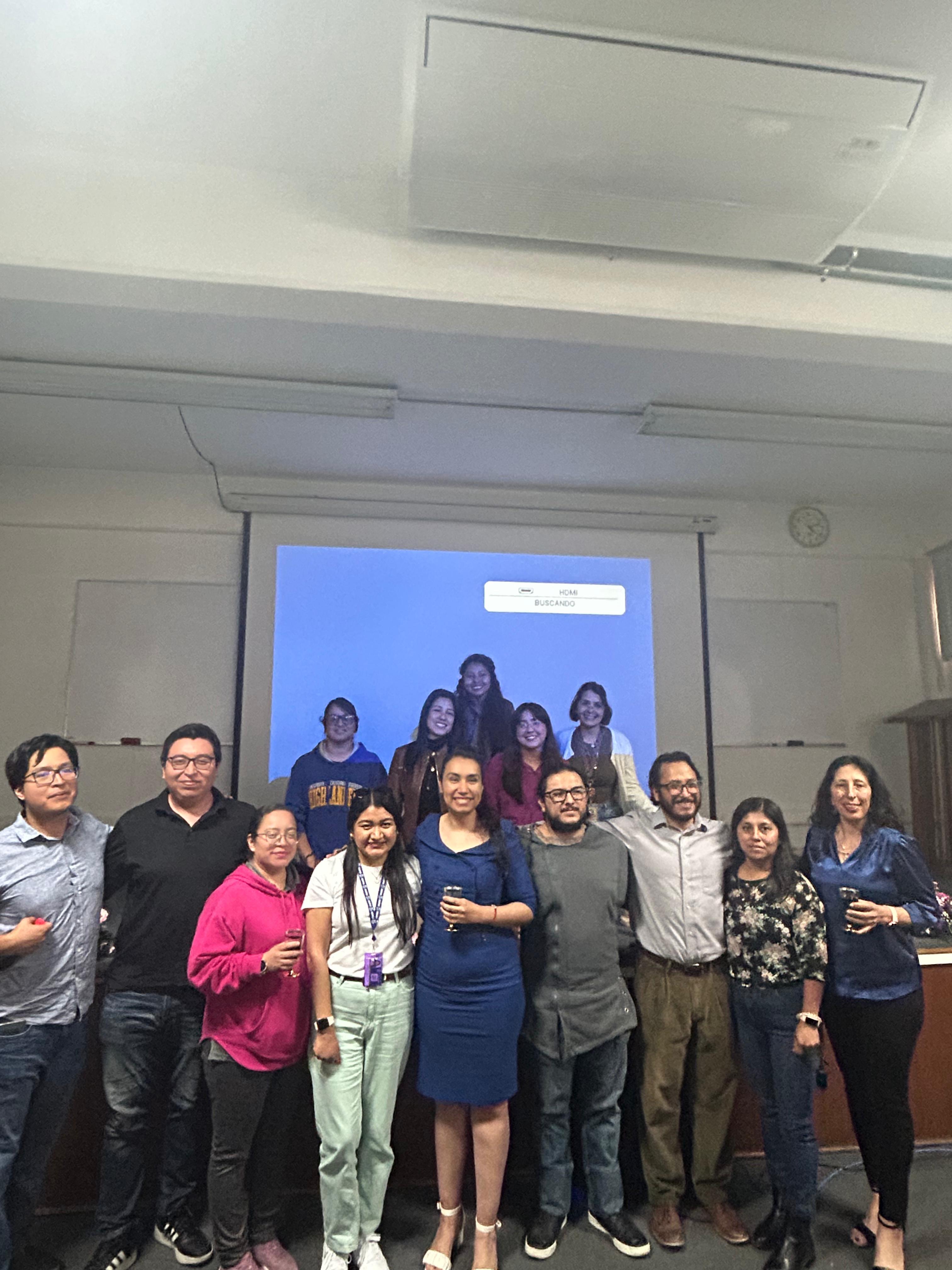
El lunes 20 de octubre de 2025 se defendio la tesis: “The effect of photobiomodulation on fundamental cellular processes in human and bacterial systems analyzing various light parameters” del alumno SILVIA ILIANA FRANCO PASTRANA para obtener el grado de Doctora en Ciencias y Tecnologías Biomédicas, bajo la dirección de la Dra. Teresita Spezzia Mazzocco y la codirección de la Dra. Carolina Álvarez Delgado. Presentado en el Auditorio Docente, a las 12:00 p.m.
Conto con el siguiente jurado de examen:
Dr. Francisco Javier Renero Carrillo, INAOE.
Dra. Anabel Socorro Sánchez Sánchez, INAOE.
Dra. Hayde Peregrina Barreto, INAOE.
Dra. Svetlana Mansurova, INAOE.
Dra. Maricruz Anaya Ruiz, INAOE.
Resumen de tesis:
Photobiomodulation (PBM) therapy has emerged as a promising non-invasive modality capable of modulating cellular behavior via mitochondrial chromophores. This doctoral thesis investigates the effects of PBM on key cellular functions using standardized protocols across eukaryotic and prokaryotic models. It emphasizes the importance of evaluating various light parameters—wavelengths, doses, and delivery modes—on fibroblasts due to their critical role in wound healing, on cancer cells where PBM’s biostimulatory properties present therapeutic challenges, and in a bacterial model to biostimulate its antimicrobial secretion. For that, fundamental aspects of cell biology are discussed, including cellular specialization, energy production through mitochondria in eukaryotes and in cellular membranes in prokaryotes. The biophysical mechanisms of PBM, particularly the activation of mitochondrial cytochrome c oxidase by red and near-infrared (NIR) light, are highlighted alongside current clinical applications. Experimental findings demonstrate that PBM slightly enhances, fibroblast proliferation, migration, and mitochondrial activity. The increase in collagen production was the most important characteristic observed by the effect of PBM, in a wavelength dependent manner, with optimal results observed at 630 nm and 2.5 J/cm². The cellular response was shown to be influenced by metabolic context, particularly glucose concentration. Furthermore, fractional PBM delivery selectively reduced proliferation in breast cancer cells while preserving fibroblast function; fractionated light delivery further modulated cellular responses, highlighting the importance of temporal parameters. In prokaryotic systems, specifically B. subtilis, PBM modulated secondary metabolite production with potential antimicrobial effects, as evidenced by increased inhibition zones against E. coli under specific PBM regimens. These findings expand the understanding of PBM’s bioactivity and support its relevance in both regenerative medicine and microbiological applications.